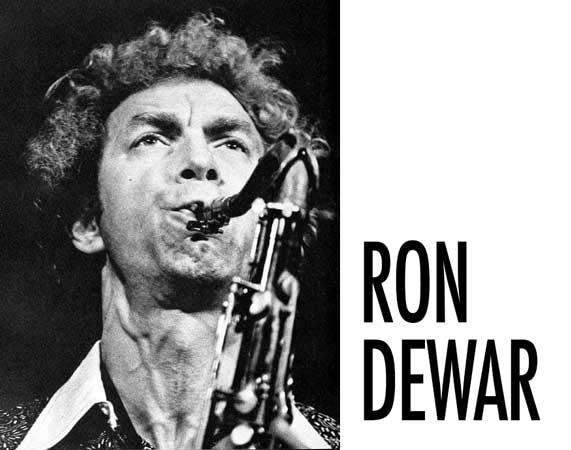
Devoted to the life, music and mentorship of Ron Dewar
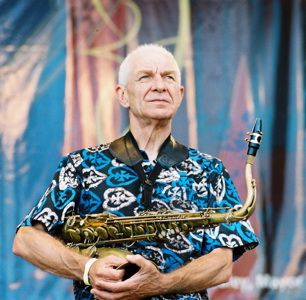
Ron Dewar was unique.
He didn’t sound like anyone else. His influences included saxophonists Sonny Rollins, Gene Ammons, Eric Dolphy and Johnny Griffin, but his ideas and style were entirely his own. He was deeply affected by the intensity and commitment of John Coltrane. He’d heard Trane in person twice but never sounded like him.
Ron had nearly limitless technique on every horn, extreme chops on vivid display in his big band playing. The compressed format of big band solos – almost entirely with John Garvey’s University of Illinois Jazz Band – meant he sometimes had only one chorus to improvise. Musical themes developed quickly. I heard this in hundreds of his solos while playing baritone saxophone next to him in the Garvey band. His solos could reach a peak and stay there, or then leap to an even higher level.
Jazz was originally dance music, and Ron could really swing. His playing was roots- and blues-drenched. You could dance to it! He told me at a bar gig that he liked when people got up and danced: “We’re not playing a concert hall.”
His free playing was inspired by free jazz pioneer Ornette Coleman, trumpeter Don Cherry and Sun Ra’s longtime tenor master John Gilmore. But again, he parroted no one. His melodic and rhythmic ideas, his approach to free ensemble playing and his evocative sound were his alone.
Speaking of unique: I can’t think of any saxophonists who also applied their talents to traditional New Orleans jazz. Ron integrated the styles of nearly-forgotten early jazz clarinetists Johnny Dodds, George Lewis and Barney Bigard as well as soprano sax king Sidney Bechet into his always-individual approach. The groups he led – The Memphis Nighthawks, Mysterious Babies and The Jack Webb Jazz Band – never sounded hackneyed or corny. Though playing music from nearly 100 years ago, they always sounded fresh. Everyone who played hot jazz with Ron shared his commitment to vibrant ensemble playing and original improvising. His playing in every trad group epitomized jazz at its best: authentic while taking chances.
And his sound! I was unprepared for what it was like to play in a saxophone section with him. He seemed louder than the entire band, and not because he was next to me. No one I’d played with had this kind of power. His tone had a kind of directionality I’d never heard before. His sound on every instrument he mastered – tenor and soprano saxophones, clarinet, bass clarinet, and even C melody sax – was intensely descriptive and vocal. His sound on tenor could be almost Getz-like in its intimacy while playing with Brazilian pop-jazz fusion group Made in Brasil, or incendiary while playing a Wayne Shorter tune with a straight-ahead small group. The first tune I heard him play with a quartet was on soprano sax, Coltrane’s The Promise. His tone was deeply penetrating and had real movement, with a kind of inner vibration. Yet his soprano sound in traditional groups was a perfect fit for New Orleans jazz while still feeling contemporary. I’ve never heard any musician with such a huge sonic palette of character and color. I once told Ron that I liked Grover Washington, Jr.’s tenor sound. He replied, “Yeah, he sounds good. But what do I do when I want it to sound like a howitzer?!”
And he could FLIP THE SWITCH:
It wouldn’t happen every solo or even every gig. But in the middle of an engaging solo, in an eye-blink, his playing would vault to a higher level of intensity and freedom. Sometimes several times in one solo! Ron’s shifts to creative overdrive feel like he’s taken wing.
But beyond his playing, I’ve never met such a selfless person. Ron was virtually without ego or competitiveness. He didn’t talk about himself and was the opposite of self-absorbed. Teaching by example instead of with a highly-defined approach, he mentored musicians on every instrument. Hundreds of players. Playing with him every single day for a year catapulted me to new levels of musical creativity and maturity, affecting me for years after. He was a genius, but the example of who he was, his character and authenticity, his generosity of spirit, this is what resonates with me most. He was truly unique.
— Brian Ripp – May 30, 2025
8 performances to make you love Ron Dewar:
Please contact me at info@rondewarjazz.com